Out and About – Chiddingstone Castle and Stone
By Theresa & Richard Emmett and Thelma & Graham Dudley
Where is it?
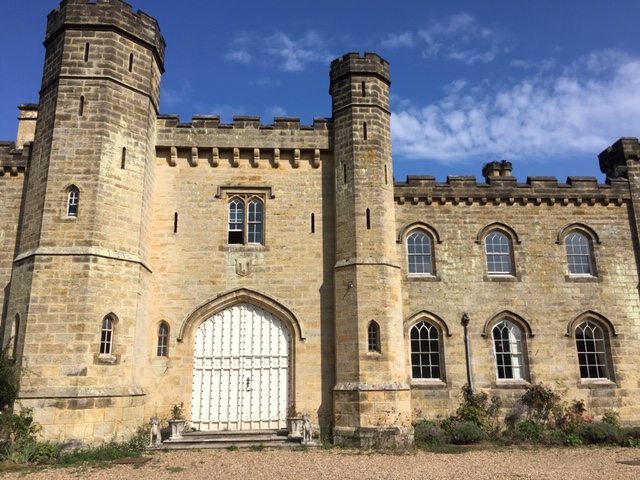
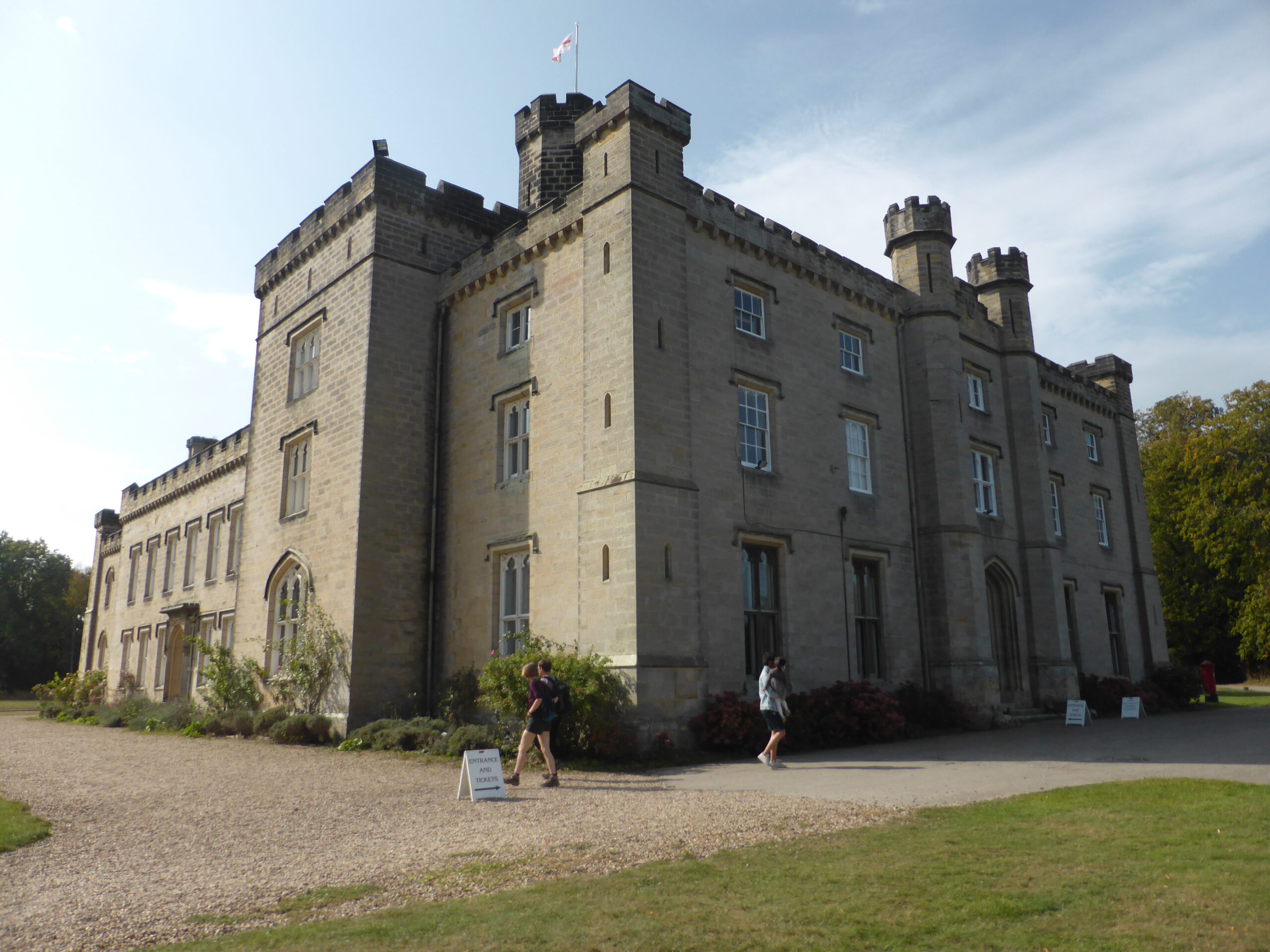
Chiddingstone Castle, is situated in the village of Chiddingstone, between Sevenoaks and Royal Tunbridge Wells in Kent.
Postcode: TN8 7AD.
Map reference TQ497451.
What is physically there?
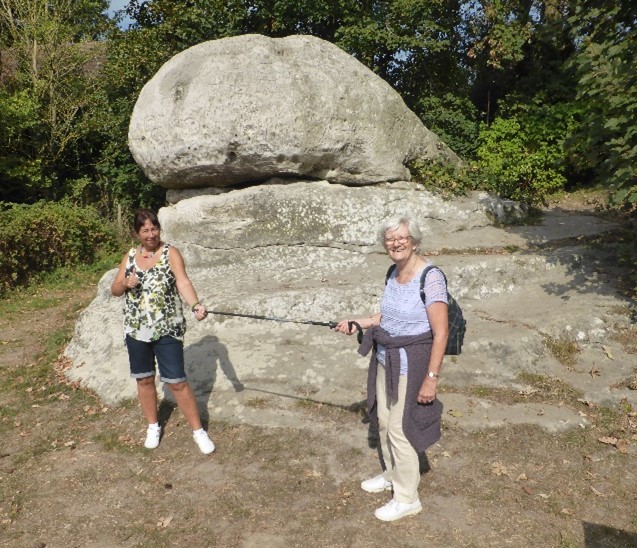
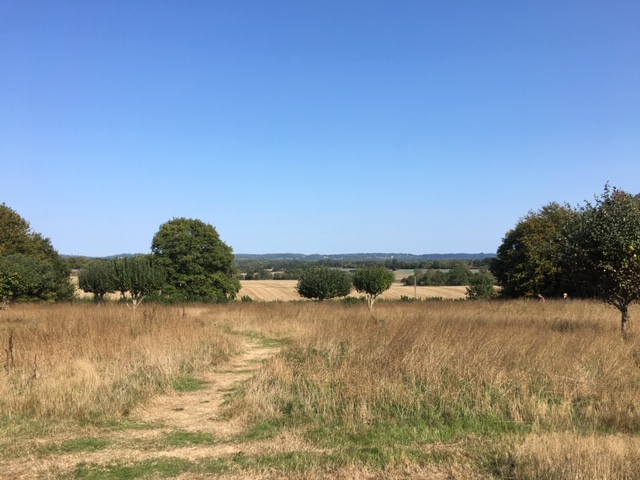
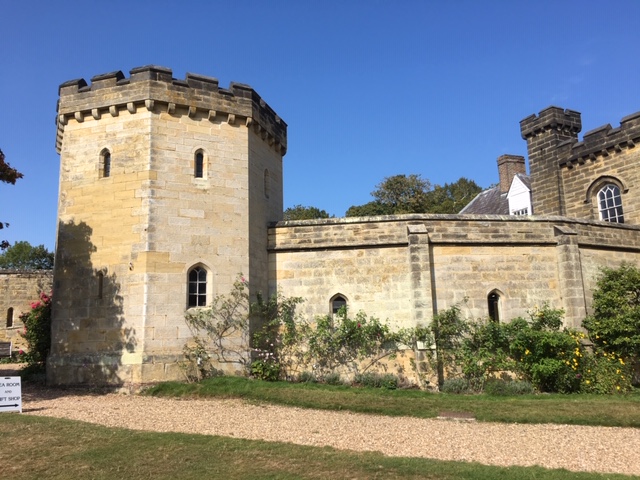
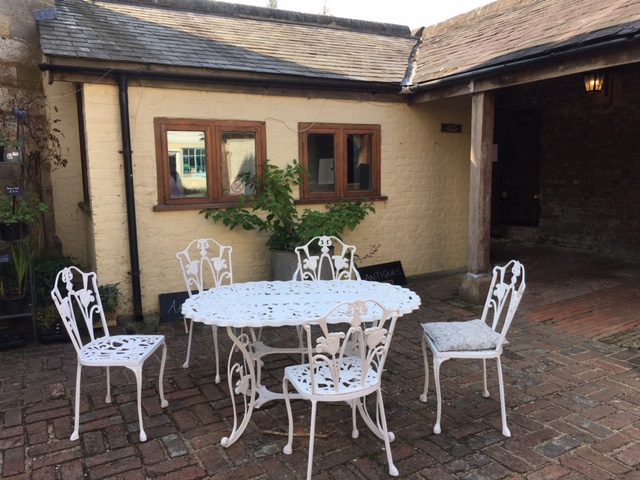
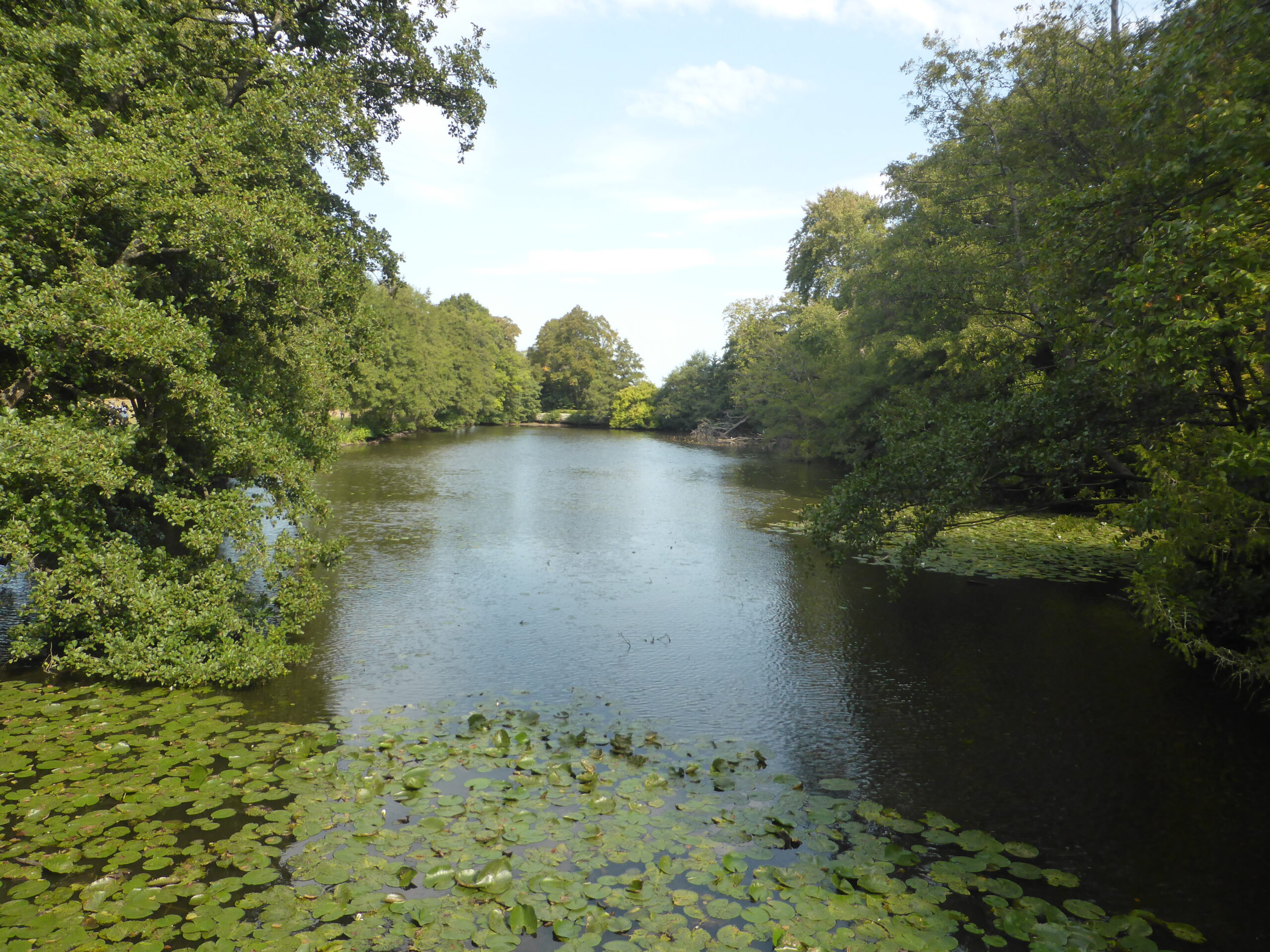
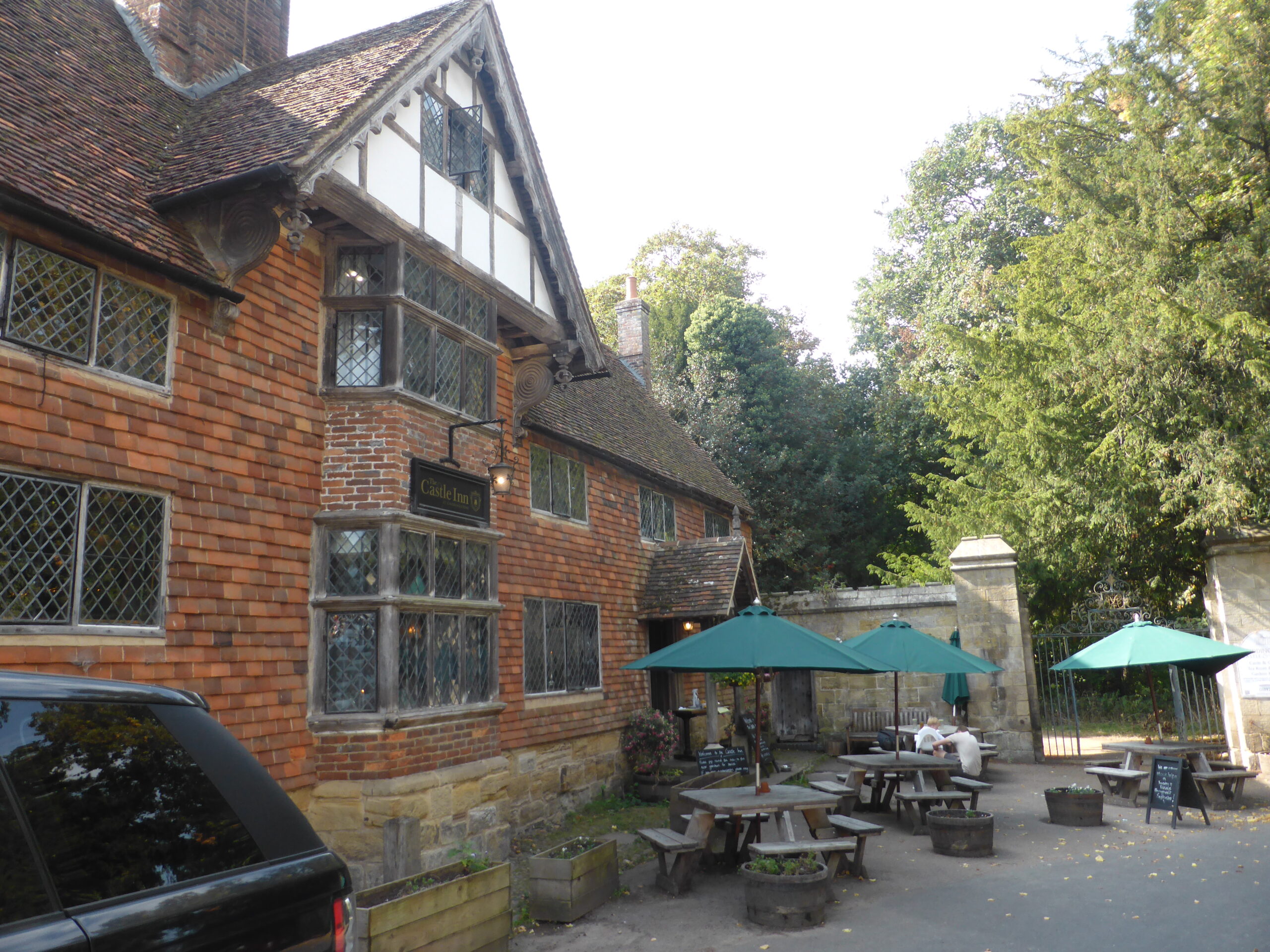
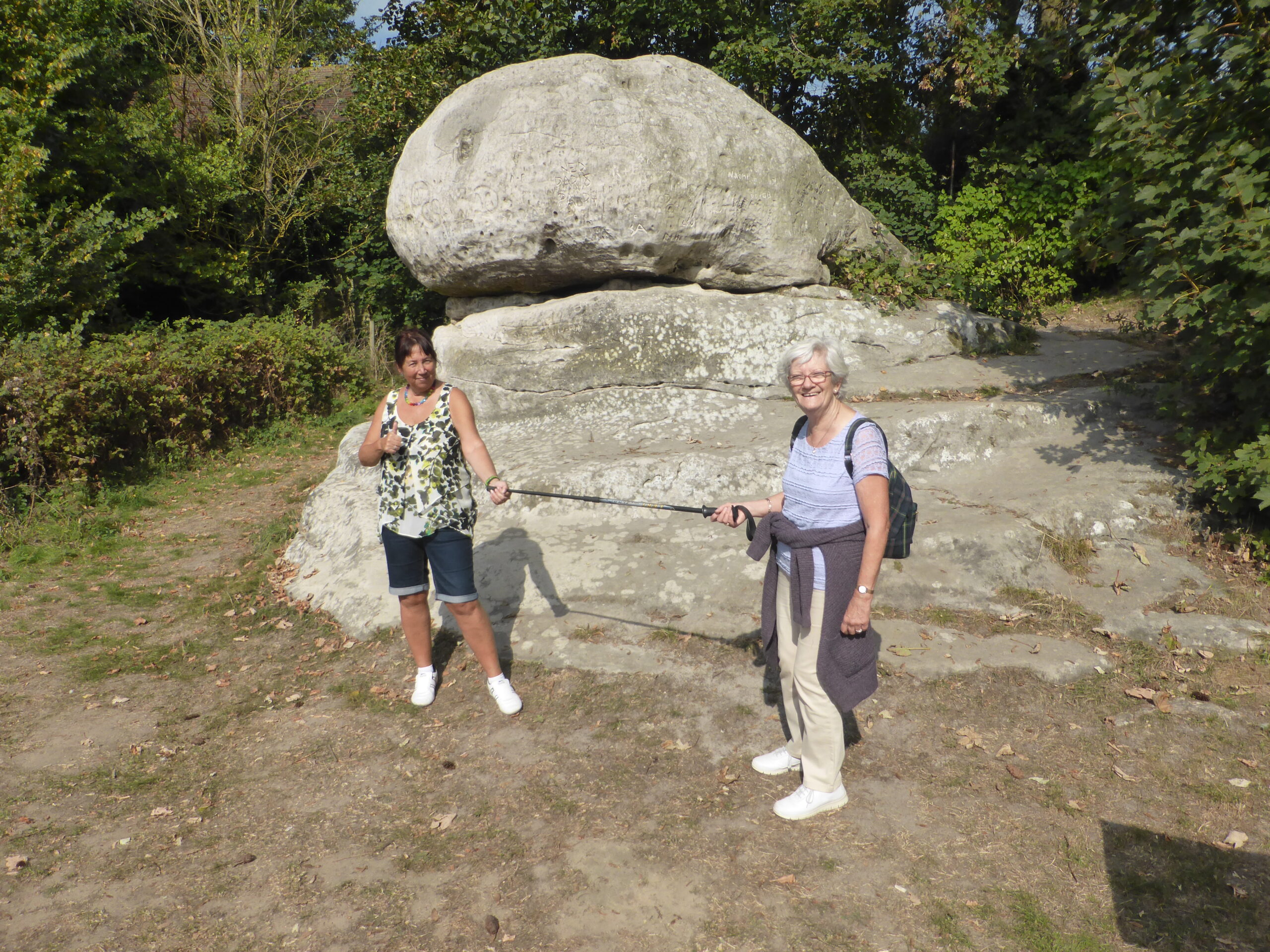
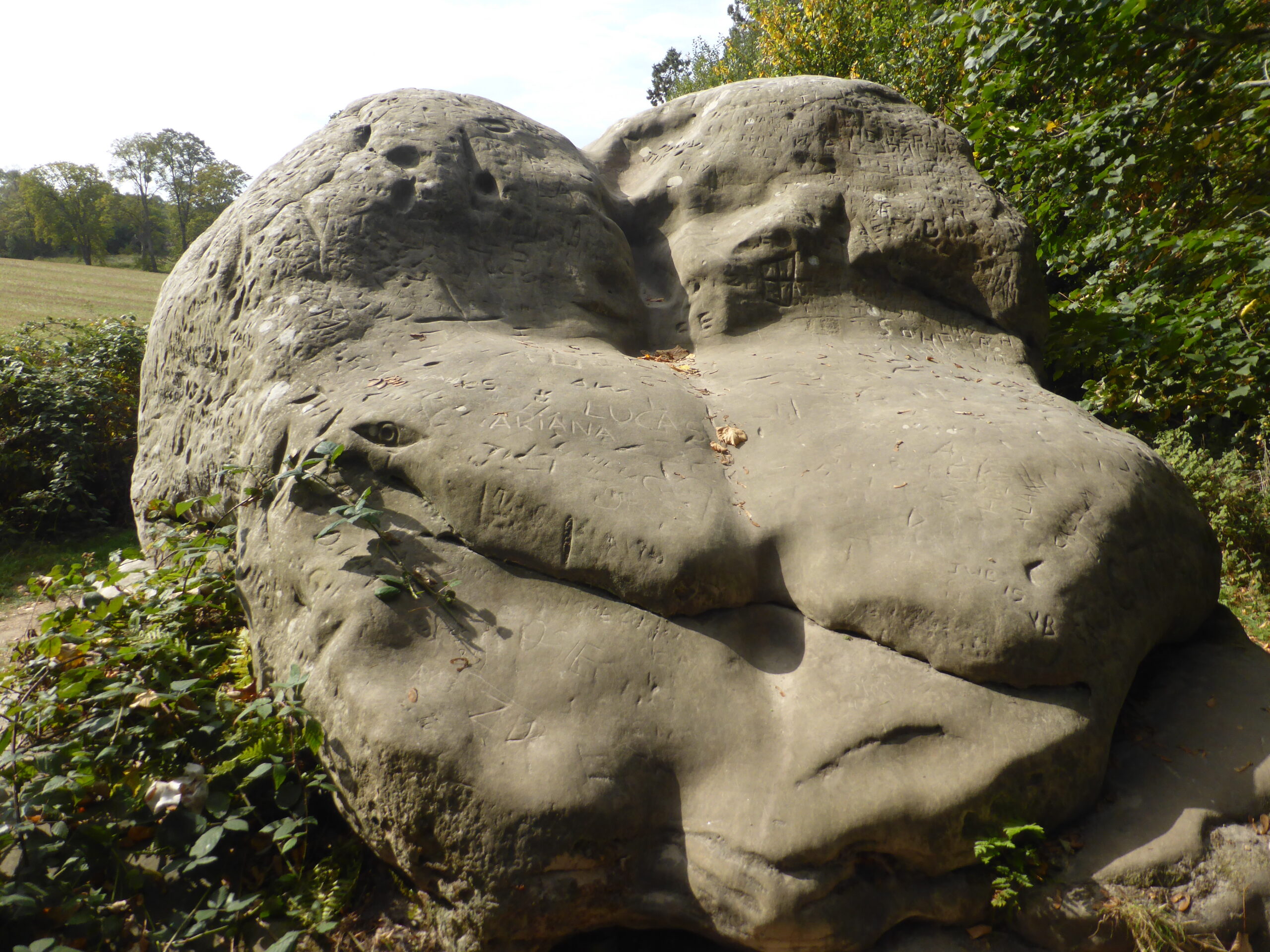
It is thought that Chiddingstone village takes its name from the ‘Chiding Stone’. The village is a fine example of a Tudor one-street village. The Castle, which sits on the edge of the street, is an accredited museum, with an outdoor tea-room serving refreshments (and has toilet facilities); plus extensive grounds that includes a lake, various walks, including one that will lead you to the sandstone known as the ‘Chiding Stone’.
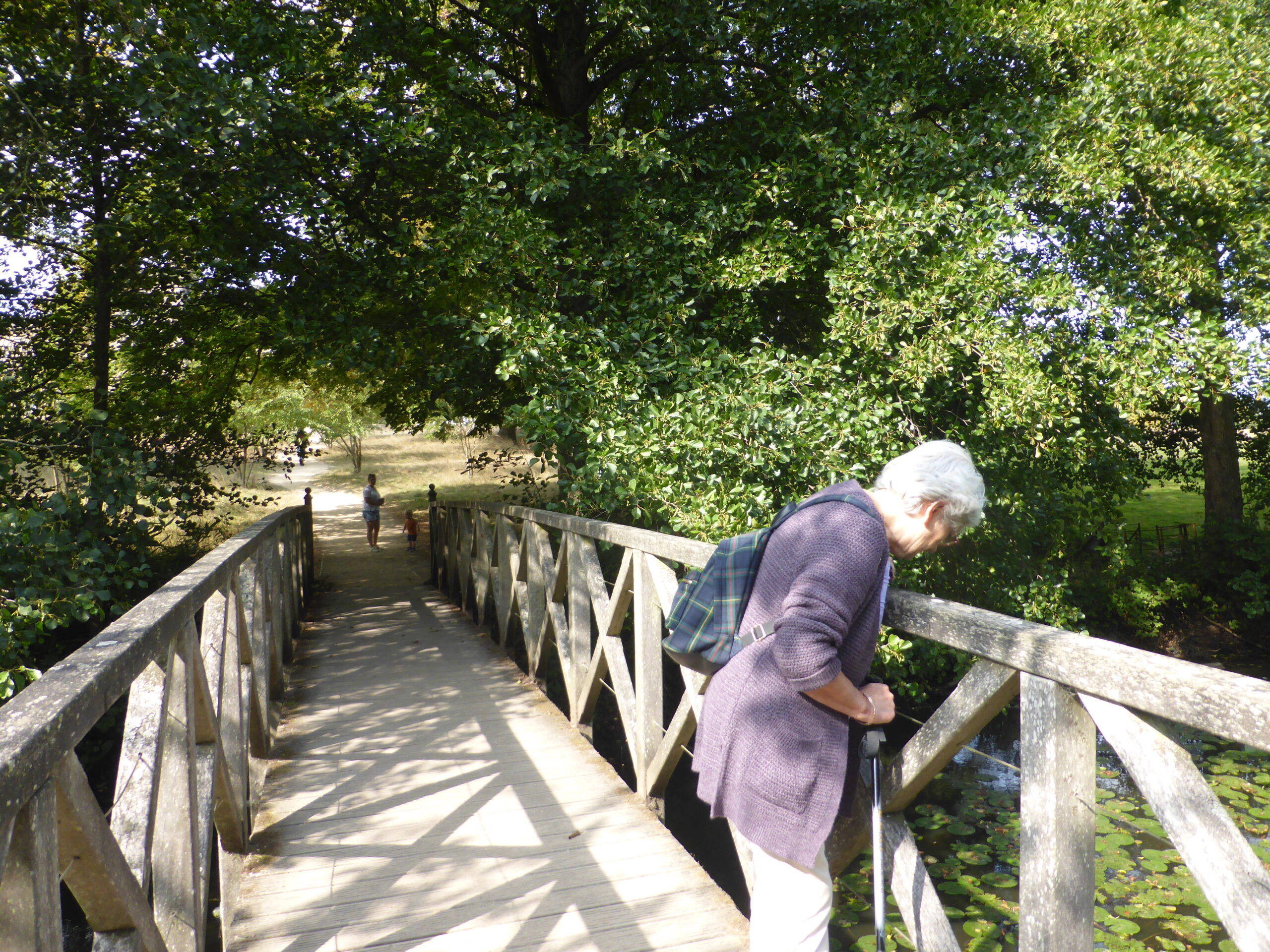
Theresa and Thelma pictured right.
Its History?
Legend has it that the stone was used as a seat of judgement, some say to remonstrate overbearing local wives and daughters. It has also been described as a Druid site and also suggested as being a landmark used as a Saxon boundary marker. Chiddingstone meaning ‘the stone of Chidda’s tribe’; Chidda or Cidda possibly being a local Saxon leader. Known as Cidingstane in the 12th century, it has over time changed to Chiddingstone.
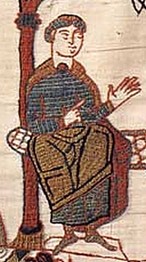
Chiddingstone was given to Bishop Odo (pictured on the Bayeux tapestry) after the Norman invasion in 1072 as part of his Earldom of Kent, and is mentioned in the Domesday Book. Odo was so unpopular throughout the county because of his greedy and tyrannical behaviour, that there has never been another Earl of Kent.
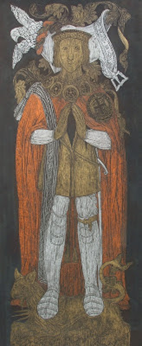
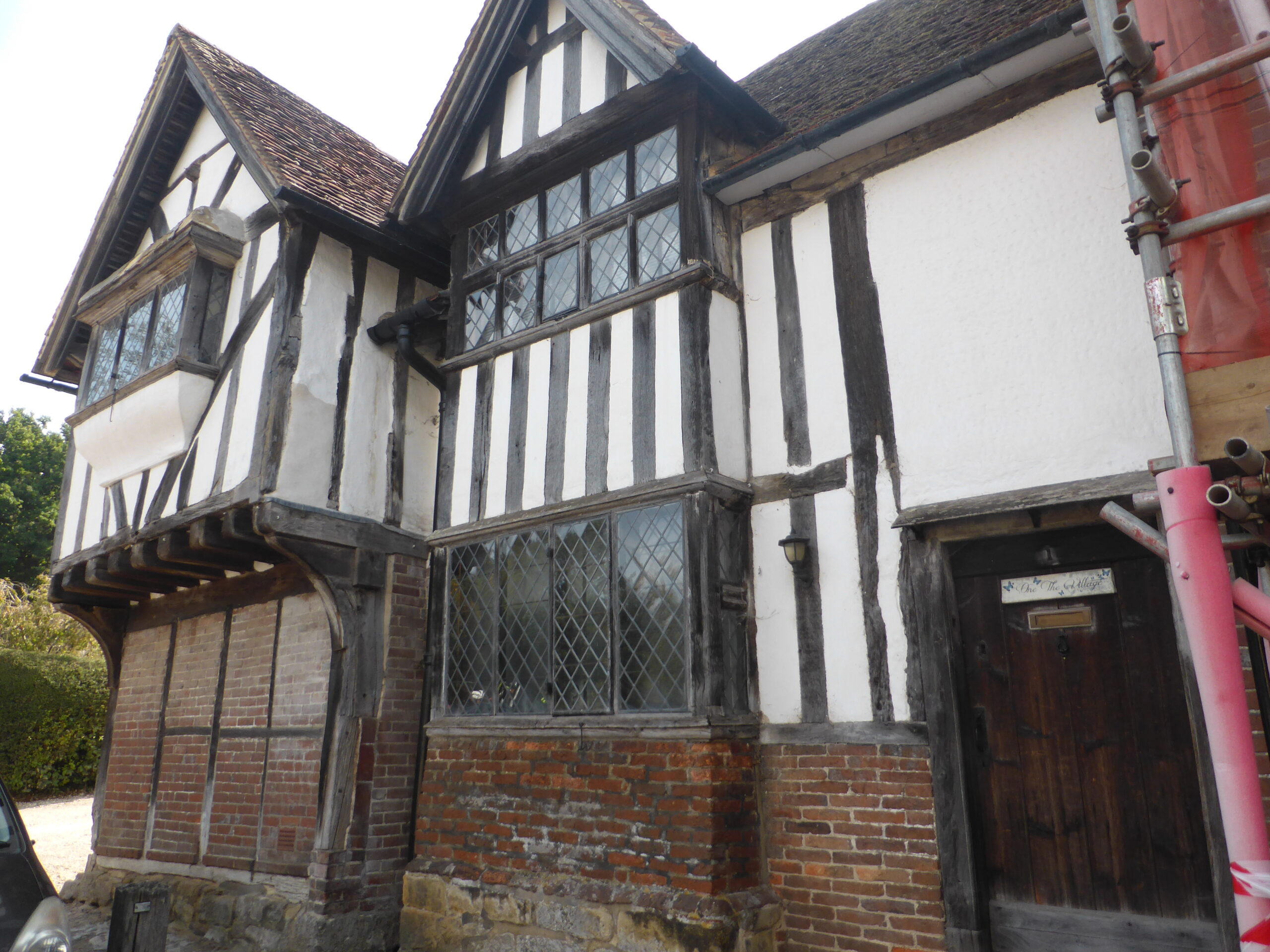
The village boasts to have the oldest sweetshop. The shop was first recorded in a deed of 1453, owned by William Hunt. Hunt and his neighbour, Roger Attwood joined Jack Cade’s Rebellion in 1450 and marched against King Henry VI. After narrowly failing to take the Tower of London, the revolt was quashed and Cade murdered, Hunt and Attwood fortunately received pardons, although many of their compatriots were rounded up and hung. Hunt’s home was later bought by Sir Thomas Bullen (the father of Anne Boleyn) who bought property in the village during the early 1500s, before the family’s fall from grace, after Anne was executed by Henry VIII.
The first significant building to occupy the site of the castle was a timber-framed structure, inhabited from the early 16th century by Richard Streatfeild (1559-1601), who was an ironmaster and wool merchant. Little remains of this first structure as, in 1679, Henry Streatfeild (1639-1719) had the house rebuilt in red brick. The building was known as High Street House or High Street Mansion since it fronted the village high street. Remodelling of the house’s grounds in the 19th century resulted in the current diversion of the road through the village.
Although the Streatfields owned the house, now renamed Chiddingstone Castle, it was sold to Lord Astor in 1938, and the family did not live there after 1900. During the Second World War, the castle hosted members of the Canadian Forces, before becoming Long Dene School, until 1954.
In 1955, the castle was purchased by Denys Eyre Bower (1905-1977), a former bank clerk and antiques dealer, in order to display his own collections. Bower was born in Derbyshire and started collecting at a young age. Bower initially worked as a bank clerk and later became an antiques dealers in London in 1943. However, in 1957 Bower was convicted of attempted murder of his girlfriend, Anna Lena White, and attempted suicide and sentenced to life imprisonment. Released in 1962 after successful efforts by solicitor Ruth Eldridge to prove a miscarriage of justice, Bower returned to Chiddingstone Castle which, with the help of Ruth Eldridge and her sister Mary, he continued to open to visitors until his death in 1977.
Bower left the castle, and his collection, to the nation and so upon his death the Denys Eyre Bower Bequest was formed. This trust continues to care for the castle and its collection, opening it to the public and providing a venue for weddings, and the current trustees include descendants of the Streatfeild family. The castle is a Grade II* listed building and the grounds, which contain further listed buildings including an orangery, are themselves included on the National Register of Historic Parks and Gardens.
Why Visit?
The parking at the castle is easy, and costs just £2 for all day via an honesty box. The grounds are enjoyable to sit in and enjoy a picnic, or for £10 you can fish in the lake.
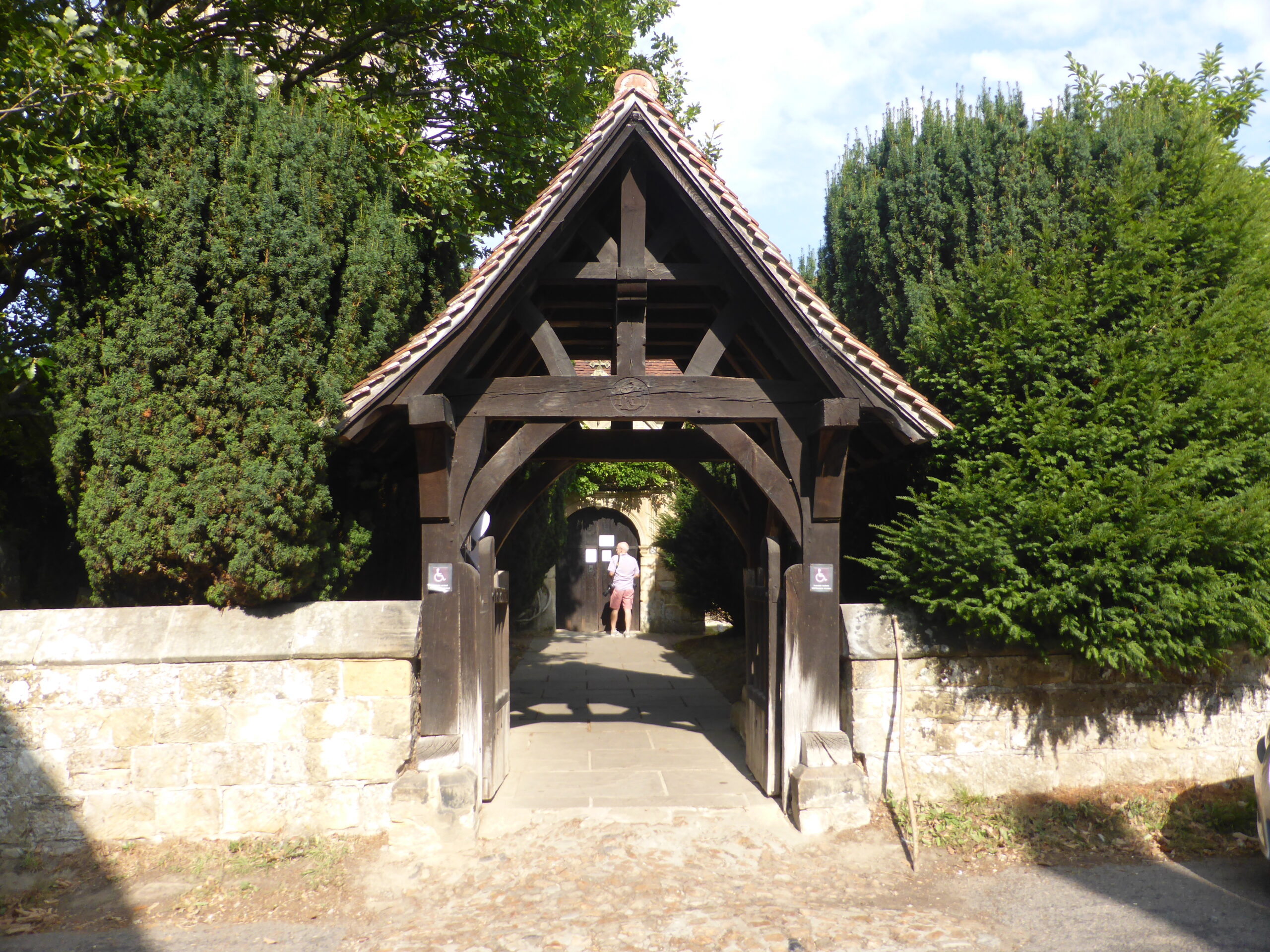
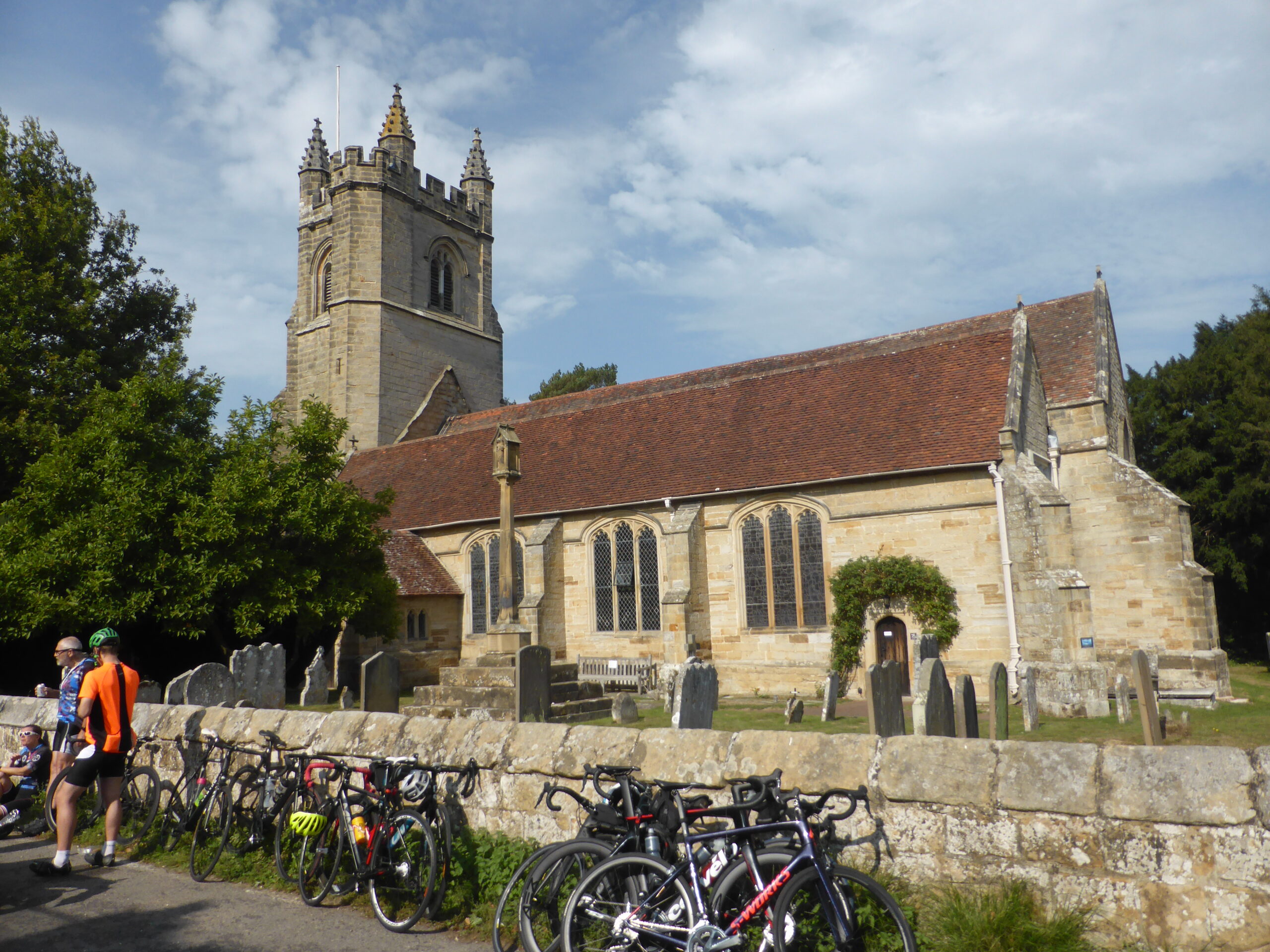
Chiddingstone village is unique in that, apart from the school, church and the Castle, the entire village is owned by the National Trust, a legacy from John Arthur Fallows of Bournemouth. It is described as being ” the most perfect surviving example of a Tudor village in the county”.
Let us know what you think when you visit: Contact us
More Out and About
For more places to visit Click Here.