
Ivy was born in Wansted, London on 19th January 1922, and was baptized at St Margaret’s Church, Barking, on 16th April that year. In 1926 her mother, Martha (23/2/1883-23/12/1962) married Alfred Ottaway (8/7/1872-1959). The family moved to Frinsted, and she attended Milstead and Frinsted Church of England School. Ivy was confirmed by the Bishop of Dover on 15th May 1935, and took her First Communion at St Dunstan’s Church, Frinsted.
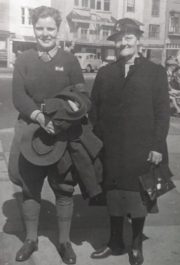
By 1939, Ivy was living at Ringlestone Cottage, with her mother and step-father, who was a wood cutter and spike maker. Also living with them was Ivy’s half-brother, Henry (30/1/1912-1984) the son of Alfred’s first wife, Isabella Redman, who was also working as a wood cutter and spike maker. When Ivy left school, aged sixteen, she started work as a kennel maid, and in February 1939 she noted in her diary that ‘Marlin’ came 5th at Crufts.
She had a very close relationship with her mother, who worked as a domestic servant as well as taking in washing.

Ivy helped her, by collecting and delivering the washing, and also worked as a servant before the war started. Her diaries, which she kept throughout the war years give an insight into her life, character and interests, as well as providing a record of the weather! In November 1939 she started a new job at Yeoman’s Nurseries, and she was to work on the land for the next decade.
In 1940 she applied to join the Women’s Auxiliary Air Force, but when she wasn’t accepted by them, she joined the Women’s Land Army. Her uniform arrived on 1st January 1941, and in the April she gained her driving licence, so she was able to drive a tractor. Her work did not just consist of ploughing, drilling and harrowing; there was digging and hoeing; brussel sprout picking and corn crushing; digging up mangels (beets that were grown for cattle food); as well as fruit picking. She was also a member of the land Army Timber Corps.
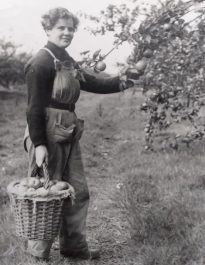

On 6th October 1941 Ivy started a new job at Ifield Court, Singlewell, so she was not at home when her parents moved from Ringlestone to Maple House, Beaux Aires, Stockbury, that November. She went to live there in March 1942 when she started working for Mr Clarke at Mears Court Farm. In April 1944 she went to work at Mr Bishenden’s farm in Newington, which is where she was working when the war ended in 1945. Ivy continued working on farms after the war, and was employed at Bicknor Farm, Bredgar, when the Land Army was disbanded in November 1950.
Being a member of the Women’s Land Army (WLA) was a very important part of Ivy’s life. She made many friends and took on the responsibility of becoming the Secretary of the Maidstone Branch of WLA. On 28th July 1945, she went to Canterbury to attend a Land Army Rally at which HRH Duchess of Kent was present. Ivy was chosen to represent all members of the Women’s Land Amy, when she led a Farewell Parade of 500 women before the Queen (the wife of King George VI) at Buckingham Palace on October 21st 1950. When speaking afterwards, to a reporter from the East Kent Gazette, Ivy said that she thought that the Queen, who spoke to her, was ‘an extremely gracious lady’. She also felt that it was a ‘very great honour’ to lead the parade. Ivy was also honoured with the award of the British Empire Medal for meritorious service.

During the war, Ivy started to have singing lessons, and hoped that she might become a professional opera singer. She sang with the London Philharmonic Orchestra at the Royal Albert Hall and for Princess Elizabeth. Although her dream of a professional career was not realised, Ivy put her talent for singing to good use by singing for the troops with the Entertainments National Service Association (E.N.S.A.), and raising money for charity by taking part in concerts in local towns.
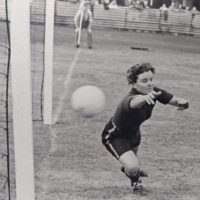
However, singing was not her only talent. She started playing football with other women in the Land Army, and continued to play after the war. In those days women were not allowed to play matches on Football Association grounds, but that did not stop Ivy. She campaigned to get women’s football accepted, and played in charity matches all across the country. In January 1951 she made her last appearance in an international match, playing as goalkeeper for the English team in a match against Scotland. Her love of sport was not limited to football though; as a schoolgirl she was the East Kent Girl Guide’s diving champion, she played cricket for Lenham and hockey for London Tech.
Her war-time diaries paint a picture of a young woman who loved life, and lived it to the full. In spite of often having to travel miles to and from work, she would go out again in the evening to dances at local village halls, as well as in Sittingbourne and Maidstone. For her it wasn’t ‘early to bed and early to rise’ it was frequently ‘late to bed and early to rise’. She enjoyed riding and taking the dogs for a walk, and in January 1941 she went sledging at Frinsted with her brother and two friends. Ivy liked listening to radio shows, playing records on her gramophone, and welcoming visitors, like those from the local Jewish community, to her home in Ringlestone.

She also enjoyed going to the cinema in Sittingbourne and Maidstone, and kept a record of the films and stars that she saw. Later in the war she started going to pubs, like the ‘Harrow’, and occasionally returned home a little ‘tipsy’.

She had a wide circle of friends, both girls and boys. Many of the young men she went out with were serving in the RAF, although if she went to Chatham, she might meet up with a sailor. Second dates, though, sometimes led to disappointment when the young man didn’t turn up! She regularly visited members of the Territorial Army and Home Guard when they were on duty in the area, and in September 1939 ‘Tom’, one of the soldiers, gave her a ride on a motor bike. She later had one of her own, which she loved. Usually though she travelled by bus or rode a bicycle, and frequently suffered problems with punctures. Once she moved to Maple House, Ivy joined the Stockbury Youth Club, of which she became treasurer.
Sometimes she went to stay with friends, or went on day trips to the seaside, like Bexhill, St Leonards or Margate. Throughout the war she kept in touch with friends by writing letters, and she often sent them photos of herself. She also kept photos which special friends sent to her.
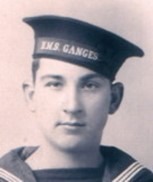
Ivy was engaged to a sailor during the war and they had planned to marry. Even though his full name was unrecorded in her diaries and in later recollections with friends, Ivy often referred to her finance, ‘Philip’, and their mutual love of classical music. Unfortunately Philip was killed in action. Another friend was Horace Charles Rayfield, known as ‘Joe’. He had been born in Hollingbourne on 3rd July 1917, and he served in the navy on ‘HMS Ganges’. By 1943 he was an Able Seaman on the destroyer ‘HMS Pakenham’, and he died on 16th April that year, after his ship was attacked by Italian torpedo boats off the coast of Sicily.

Once she finished working on the land, Ivy had hoped to join the police force, but was discouraged from doing so by her step-father. Instead she became one of Sittingbourne’s first traffic wardens. She did the job so well that, in 1976, she received an award as ‘Southern Television’s Most Likeable Traffic Warden of the Year’.
Although being a traffic warden was her job, she continued to enjoy life and pursue her interests. Her time working in a nursery gave her a life-long interest in flowers, especially roses, carnations and dahlias, and she won awards at county shows for the blooms that she grew. Having been a member of the Girl Guides as a child, she later volunteered to lead new groups that were formed in Stockbury and Hartlip in the 1960s. She was also an active member of the Women’s Institute in Stockbury.
Ivy’s love of fun was especially clear by her involvement in local carnivals. After her retirement, when she was 65, she became a member of the ‘Sittingbourne Active Retirement Association’ (SIARA) and joined their Concert Party.

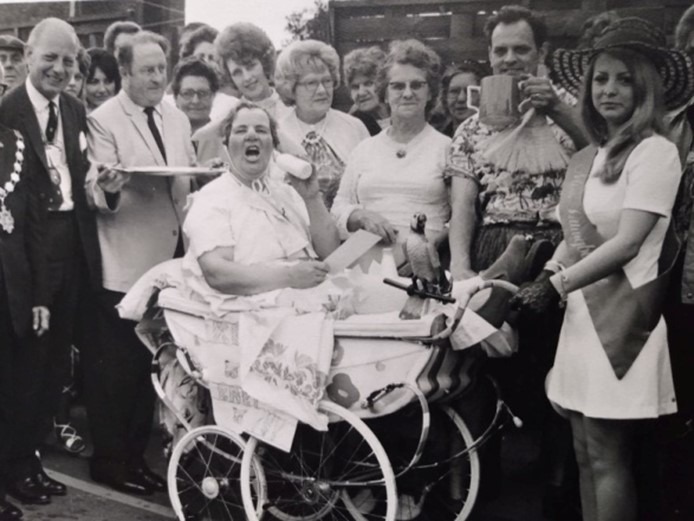

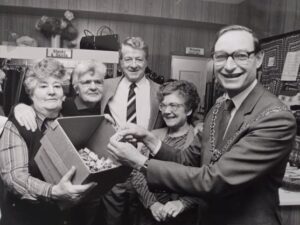
Throughout her adult life Ivy raised money for charities, and by 1976 she had raised £70,000. She was one of the founding members of the charity that supports Demelza House, and she volunteered at the charity shop in the town. The children’s hospice opened in Sittingbourne in 1998 thanks to her fundraising activities and those of the Sittingbourne Friends of which she was an active member. Ivy regularly volunteered at the hospice, and was often asked to chaperone important guests, like the Lady Mountbatten, the charity’s patron. She was also the first to volunteer to escort the Captain and sailors of HMS Kent when they visited the hospice as part of their adoption of this children’s charity. Ivy always had a soft spot for a man in uniform!
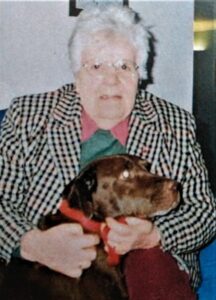
Ivy often took the hospice’s dog, Co-Co, and the resident goat for walks, much to the amusement of the staff and residents. Ivy was very well-liked by all who knew her, and her friends at Demelza House threw a huge party for her 80th birthday.
Ivy died on 12th May 2015, aged 93, and was cremated at the Garden of England Crematorium in Bobbing. Her ashes were scattered on the grave of her much loved Mother in Stockbury church.
Several of our members remember Ivy with fondness, and we thank her good friend, Anthony Medhurst, (who worked at Demelza House), and who provided HRGS with Ivy’s photos, diaries and personal memories collection, that are now stored in our archives and also available on show in our research room at the Heritage Hub.