Our aim is to investigate, record and promote the history of Sittingbourne and the local area by research, study, education and publication.
We believe that History is the Glue that holds Communities Together
The Historical Research Group of Sittingbourne is a non-profit making organisation, set up in 2004, by a group of local volunteer historians.
The members of the Historical Research Group of Sittingbourne (HRGS) share a passion for history, in particular for our local heritage. We run group research projects and support members with their individual research interests. Many of our members are actively involved with archaeology and we hold various events and digs throughout the year.
HRGS were previously at The Heritage Hub, Unit 17 The Forum, Sittingbourne, and have moved to The Heritage Annex, 110 High Street, Rainham, ME8 8AR.
Our facilities there include our Library, Archive and Research Facilities, all available by appointment by contacting us.
The Research Room, available to our members, contains a large collection of local resources, including documents, microfilms, photographs and maps, as well as its own local history and archaeology library.
We publish research articles ten times a year, written by local people for local people, in our magazine called ‘The Archive’. To learn more about us, please visit our Facebook, or purchase a copy of “The Archive”.
All of our work is carried out by volunteers.
With over 37,000 hours of time clocked up by 2022, the Historical Research Group of Sittingbourne ‘Heritage Team’ volunteers are at the heart of what we do. We carry out local heritage investigations by documentary and archaeological research. Much of this work is then published and or presented both visually and orally to the community via our exhibition centre, known as The Heritage Hub.
We wish to thank all our volunteers and appreciate the time and effort they put in. Their work and enthusiasm is appreciated and celebrated as can be seen below. We also always welcome all offers from volunteers. There is always work to be done and whatever your skills and whatever time you can give, we can find something for you to help and enjoy doing. Call into the Heritage Hub and have a chat with us.
HRGS Committee
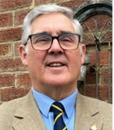



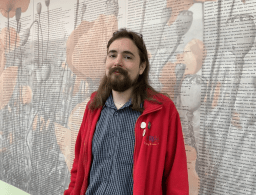


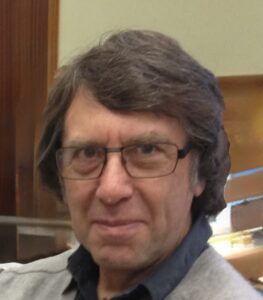
Learn more about our committee members below.
Born in St Osyth, Essex, Richard grew up with an interest in the world beyond his doorstep. His early experiences in the Air Training Corps helped develop his interest in leadership and service, followed by adult service in the Army Cadet Force and the Territorial Army. He went on to serve in policing, including a long career with the City of London Police, where he was involved in public service and emergency planning.
Alongside his professional life, Richard pursued academic qualifications in emergency management and archaeology, gained a leadership and management qualification, and became a Course Director with the Professional Association of Diving Instructors (PADI). In 1991, he led expeditions in remote Patagonia with Operation Raleigh, taking responsibility for young adults working in challenging conditions.
After meeting his wife Theresa and moving to Kent, Richard discovered a new way to serve his community through local history and archaeology. Joining the Historical Research Group of Sittingbourne in 2009 following interest in a local WW2 V-1 flying bomb incident at Upchurch. He became Chair in 2014 and helped develop HRGS from a volunteer research group into a much more visible community heritage organisation, with WW1 remembrance events, exhibitions, publications, archaeological projects, and a public-facing Heritage Hub.
His work has included leading the Sittingbourne War Memorials Project, researching local lives and wartime sacrifice, promoting heritage education and helping secure new facilities for local research. HRGS’s collective contribution was recognised with the Queen’s Award for Voluntary Service in 2020. He received a Volunteer Swale award in 2020 for charitable fundraising.
Richard’s story is ultimately about service, curiosity, and community. From policing and the armed forces to archaeology and heritage, he has continued to learn, lead and volunteer. He and Theresa share along with HRGS, the belief that local history belongs to everyone, and that preserving the past is not simply about remembering what has gone before, but about giving future generations a stronger sense of place, identity and belonging.
History is the Glue that holds Communities Together.”
Theresa is Secretary and Volunteer Liaison for the group, where she plays an active role in supporting the organisation’s work to investigate, record and promote the history of Sittingbourne and the surrounding area.
With a strong commitment to local heritage, Theresa brings together skills in organisation, communication, research, publication, volunteer coordination and project development. She works closely with committee members, volunteers, researchers and partner organisations to help ensure that local history is preserved, shared and made accessible to the wider community.
Theresa is closely involved in the production and promotion of The Archive, HRGS’s local history magazine, and supports the development of books, heritage calendars and other publications that bring the stories of local people, places and events to life. She also contributes to research projects, responds to local history enquiries and helps coordinate the talks, activities and public engagement through which HRGS connects people with their heritage.
A key strength is her ability to bring people and ideas together, turning research and enthusiasm into practical projects. Her work involves managing correspondence, supporting volunteers, liaising with external organisations, promoting events and helping to develop new opportunities for heritage research, education and community involvement.
Theresa is also committed to the longer-term future of Sittingbourne’s heritage. She is actively involved in discussions about how local heritage organisations can work together, strengthen their partnerships and secure sustainable facilities from which to continue their work. For Theresa, history is about much more than recording the past. It is about discovering the stories that shape a community, sharing them with future generations and helping people develop a stronger connection with the place they call home.
This reflects the HRGS moto and her belief that “History is the glue that holds Communities Together.”
Stephen was born in Woolwich, London, and started work as an apprentice with GEC Telecommunications building and commissioning telephone exchanges. Stephen moved onto BT in 1986, just as the digital age started, and where he worked in various roles including project management and financial analysis.
Whilst at BT he worked on innovative projects in the late 1990s including the trial of streaming TV, where a 1 1/2 film took over 2 hours to download before you could watch. Also, on a project to read water and electric meters over the phone line, then a modern day smart meter. His work in this period resulted in two Chairman’s award.
Stephen has had a passion for family history and has researched his own family, some back to 1400 and helped others with their ancestries. This work led to an interest in social and local history.
Stephen moved to Sittingbourne over 40 years ago after he married, and his passion for local history of the area started.
After leaving BT in 2018 he joined HRGS just as the War Memorials project delivered the Wall of Reflection and his inquisitive mind on the project led to him volunteering for the Imperial War Museum War Memorials Register, and sought out all the war memorials in Swale. He continues to volunteer for them adding new memorials as he finds them. He also volunteers for the Commonwealth War Graves Commission as a EOHO (Eyes On Hands On) volunteer monitoring and cleaning the war graves in Sittingbourne Cemetery and 14 local churchyards. This has expanded into doing tours of the local cemeteries and as a speaker presenting the work of the CWGC.
For HRGS Stephen is the treasurer and web master, and an active researcher into those lost in the wars and local history, together with cataloguing our collections.
Karen was born in Rainham and moved to Sittingbourne about 20 years ago after returning from Brussels where her job took her for over 5 years. Her mother’s roots were local to Swale with family coming from Murston, Teynham and Sittingbourne.
Karen worked for over 30 years in administration and as the International Development Manager for one of the largest global law firms. The organisational, communication and research skills she developed there now assist in her roles as Committee Member, Events Secretary and Minute Taker for HRGS.
Her interest in history began at school, not least because she attended Fort Pitt School for Girls in Chatham where pupils were surrounded by history every day. Classrooms included a former operating theatre, wards and isolation blocks which had been part of the military hospital formerly based there. Karen was also very much influenced by Joan Howard, an inspiring and unforgettable history teacher at Fort Pitt.
Karen works on various HRGS projects but is particularly researching into the men and boys who died in the gunpowder works explosion at Uplees, Faversham, in 1916.
Graham’s a lifelong Sittingbourne resident and spent the first few years after leaving school as an Industrial Door Fitter. He then joined CAV Gillingham which began his 39-year career in the automotive industry all at the Gillingham site. The company had many names during this time including Lucas CAV, Lucas diesel Systems ending up as Delphi Diesel Systems (now Phinia). He also had various roles; with the later years spent within Supply Management. Initially in Supplier Quality, but mainly in Purchasing as a Production Components Buyer; which took him all over the UK and Europe and also India and Morocco.
Other roles and responsibilities He fulfilled during this time were Procedure Writer, Internal Auditor and a member of a multidiscipline team that carried out Assessment Audits of potential new suppliers as a key part of the Supplier Selection Process. Cost saving opportunities were another key aspect involving In-house, Customers and Suppliers. Graham was key to many improvements either through process improvements, productivity including rationalisation, alternative material or design change.
He was a member of a small team who had a Patent granted for their redesign of a threaded Protection Cap. Their replacement was a two part version that gave the exposed threads improved protection during the part’s remaining processing and testing, maintained the same protection during transport and storage and was quicker to put on and remove due to the reduced number of threads.
Graham is married and has two daughters. They both live in very old houses, one in Faversham and the other in Bobbing. The Faversham house is well documented, but little could be found on the house in Bobbing. He visited the HRGS unit in town to purchase the book on Bobbing to see if the property was mentioned in there. While there a Member of HRGS offered to research it for him. This is what led him (and his wife) to join HRGS in October 2025.
His hobbies are golf, and gardening and together with his wife, spends a lot of time at their allotment.