Are you interested in local archaeological research?
- Anyone who is keen can be involved.
- If under 18, you must be accompanied by a parent or guardian.
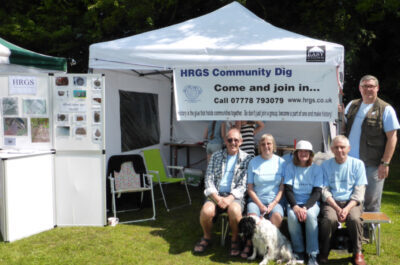
- Day members welcomed – £5, refunded if you join as an annual member.
- Free for HRGS members (Individual Annual Membership from £10 rising to £20 to include our talks programme).
- On-site training is available.
Archaeological Projects
HRGS are and have been involved in a number of projects which include:
- Boyce’s Hill, Newington
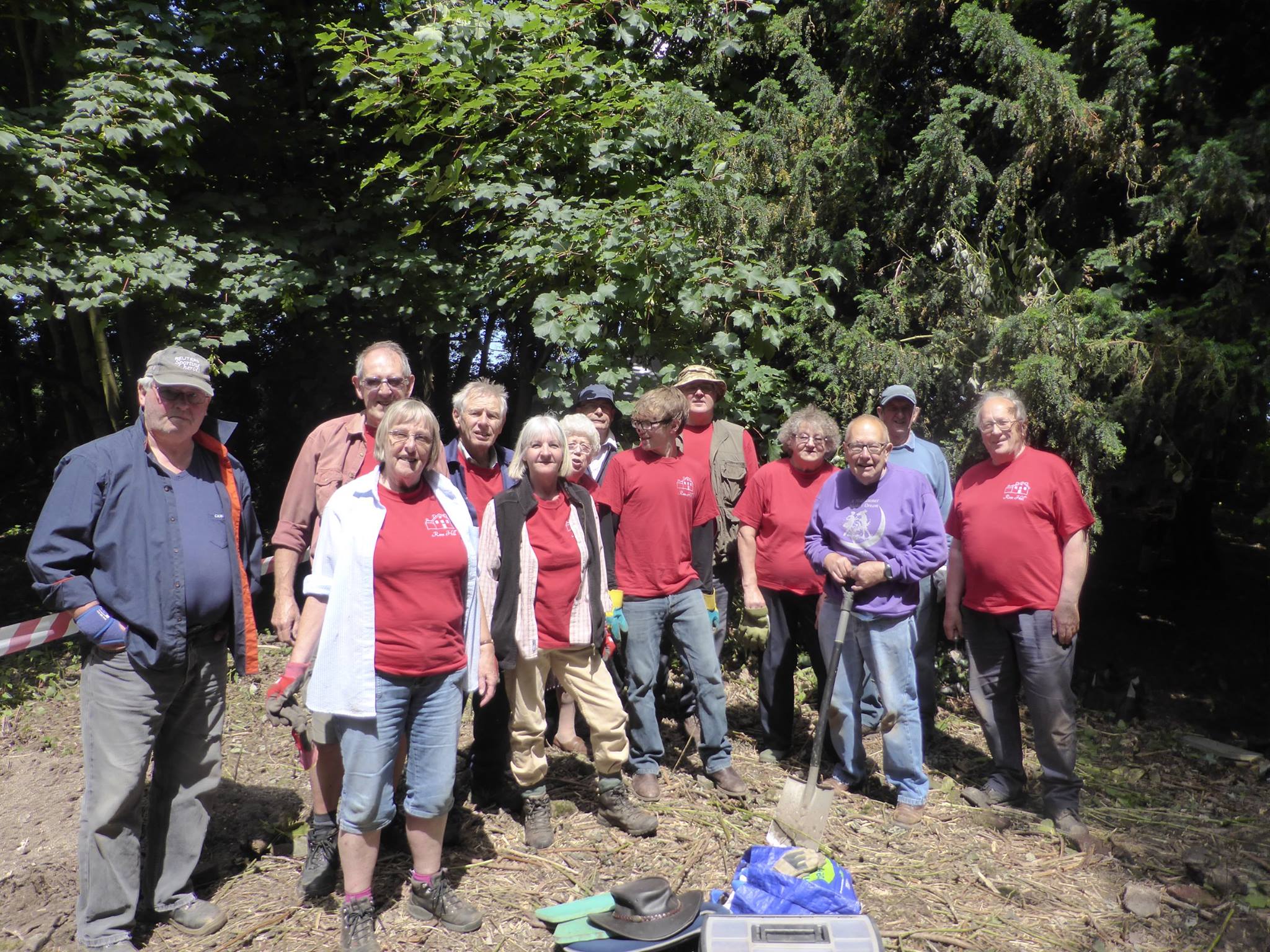
- Rose Hill House
- Bredhurst
The dates for this year’s Archaeology digs at Boyces Hill, Newington, and finds processing are:
26th Jan Sunday 10am to 3pm – finds processing at the Heritage Hub
2nd Feb Sunday 10am to 3pm – finds processing at the Heritage Hub
9th March Sunday 10am to 3pm – finds processing at the Heritage Hub
12th July Saturday Handing History in the Forum Atrium – 11am-3pm
The dig dates will be at Boyces Hill, Newington and are subject to weather conditions.
20th + 21st April – digging days and open site – 10am – 4pm
11th + 12th May – digging days – 10am – 4pm
22nd + 23rd June – digging days – 10am – 4pm
20th + 21st July – digging days – 10am – 4pm
17th + 18th August – digging days – 10am – 4pm
14th + 15th Sept – digging days – 10am – 4pm
28th + 29th Sept – digging days – 10am – 4pm
Please Contact Us if you would like more details.
Why do we dig?
Archaeology is how we learn about ancient people, how they lived, what they looked like, what tools they used and also about their culture.
The word ‘archaeology’ comes from the Greeks – meaning the study of what is ancient.
Archaeologists are the scientists who study the remains of past civilisations or groups of people.
The life of an archaeologist is far from adventure and danger as portrayed in films…but it still can be pretty exciting when we piece together the puzzle and discover something new.
What do we hope to achieve?
Archaeology is a bit like putting a puzzle together that has lots of the pieces missing. It is a cross between a treasure hunter and a detective.
Whilst we have a scientific process that we like to follow, we believe that Archaeology should be fun.
Understanding our past, helps us to decide our future. History is the glue that holds communities together.
How do we go about it?
Research plays an important part in deciding where to excavate.
Archaeologists also look at buildings, ruins, mounds or sunken features in the natural landscape. Using modern technology or aerial photography can help provide archaeologists with clues to where old roads or walls once stood.
Additionally clues may be available in books or maps.
Various resources help archaeologists to determine where to start digging. We then use modern technologies to help us understand what we have found
Archaeologists look at the things people have left behind such as their dwellings, clothes, bones, cooking utensils, weapons, money and even their rubbish. In fact rubbish pits can be one of the best places to find artefacts of the past.


The Work on site: Is it just digging?
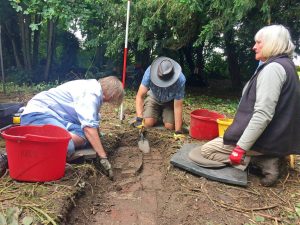
Although a great deal of effort goes into digging or excavating an archaeological site… there are plenty of additional activities that are part of the process to appropriately record, understand and make sense of the site.
These activities include…
- Metal detecting
- Geophysical surveying
- Photography
- Plan Drawing
- Dowsing
- Site surveying
- Cleaning finds
- Recording finds
- Research
So there are plenty of activities to participate in when recording a site!
The photograph on the right is part of our Handling History sessions on sorting and learning dig finds.
Kent Archaeological Society
HRGS is a member of KAS and their vision is “To promote advances in knowledge of Kent’s archaeology and history by fieldwork and/or documentary research and the publication of the results.”
The Spring 2018 edition of their newsletter featured an article about the HRGS Field Unit and its activities. A copy can be downloaded by clicking on the link below.

Are you interested?
If you interested in joining our Archaeological Field Unit then please see our Membership page or Contact Us.