
Who would have guessed that a brick works tour would be so interesting! HRGS are working with Murston Heart, and as part of that collaboration, Sioux Peto, their Community Projects Coordinator offered our members a free guided tour around the old Smeed Dean Brick Works that is run by Wienerberger. Despite it being an exceptionally hot day in July, nine of our members had a fascinating tour.
The History of Wienerberger
Wienerberger is an Austrian firm, based in Vienna, which is the world’s largest producer of bricks across 28 countries. Founded in 1819, it now manages over 215 production sites and over 17,000 employees. Of those, 40 manage the Smeed Dean site in Sittingbourne. But despite being so large, Wienerberger is proud of the history of Smeed Dean and still keep the ‘S D’ marker in the frogs of the brick to show its pedigree.
The History of Smeed Dean
George Smeed (1812-1881) started his brickfields in the mid-19th century. In 1856, his daughter, Mary Ann, married George Hambrook Dean (1836-1924), a local farmer and fruit preserver. After that, Smeed and Dean became business partners. At that time there were other brickfields located on both sides of Milton Creek, including: Muggleton (1835-1850); McKenzie (1840-1845); Ashington (1843-1845); Huggens (1830); Burleys (1875-1945); Gransden ( – 1900); Wood ( – 1928); Cornfords (- c1914) and Wills and Packhams (1870- c1960s). Smeed Dean took over the brickfields of the first three in 1860, and in 1881 56% of workers in Murston were employed in the brickfields.
In 1877 Smeed Dean produced over 60 million bricks in a year, making them the largest brick makers in Britain, and by the time George Smeed died the company was the largest brick manufacturer in the world. Smeed Dean were also land owners, cement manufacturers, shipbuilders and repairers, having their own fleet of barges, as well as owners of the houses which they built for their workers. Both George Smeed and George Hambrook Dean contributed greatly to Sittingbourne and its people. Smeed was responsible for the erection of the Sittingbourne gas works, provided the land on which Keycol Hill Hospital was built and helped fund Sittingbourne Recreation Ground. After he moved to Gore Court House in Tunstall, he allowed local cricket, football, tennis, badminton and archery clubs to use the grounds of his home, as well as holding an annual fete and Sunday School festivals there. Dean was a Justice of the Peace, served on the Milton board of Guardians and the Rural Council, was founder member of the Baptist Church and allowed his property, Whitehall, in Bell Road, to be used as a Red Cross Hospital during the First World War.

Smeed Dean They brought ash and clinker from the fire grates of Victorian London and mixed it with local chalk and brick earth to create the original ‘London Stock’ bricks. The original town ash is still used in the manufacture of Smeed Dean London Stock bricks today!
Smeed Dean’s yellow Stock bricks have been used extensively throughout London and the south of England for two centuries. They can be found in many prestigious buildings, including the Tower of London and Buckingham Palace; so Smeed Dean can rightly claim on their website to be the ‘aristocrat’ of bricks.

Here are a few of the photos from our visit…
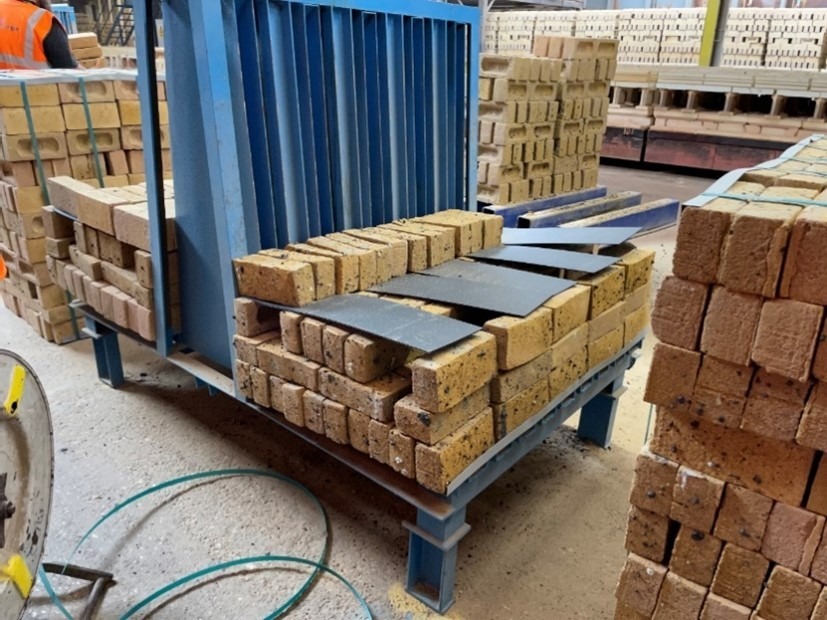

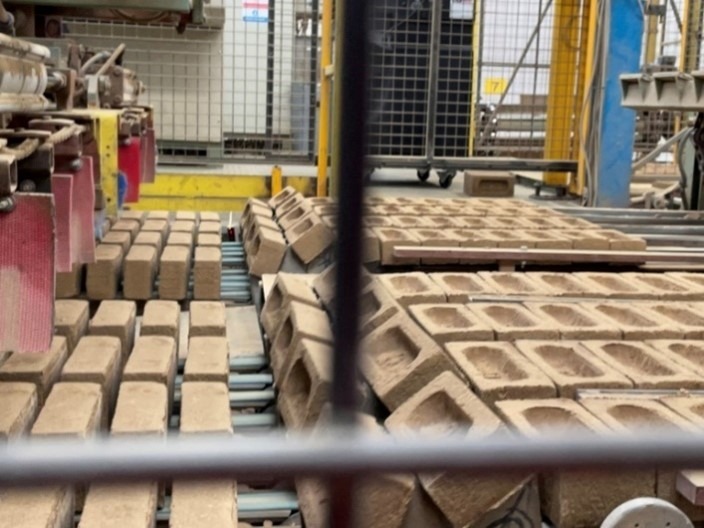


So having mined, stored, screened and then ‘mixed’ the right ingredients together (just like a cake) to form the wet clay like substance to make a brick, it is then formed, dried, fired, and cooled. The wet brick is shaped onto conveyor belts, they are dried and then fired between 10 and 40 hours in a kiln at temperatures up to 1000 degrees. Bricks shrink during the manufacturing process as vitrification occurs (liquid is removed). Bricks vary in size due to this, so they are then sorted by hand into three distractive style of bricks, with varying degree of ash content. Any that are not perfect quality are then discarded, crushed and added back to make a new brick mixture. The fundamentals of brick manufacturing have not changed over many years. However, technological advancements of kilns, and mechanisation have made todays brick plants substantially more efficient and have contributed to advancements in the brick industry. It was a real honour to be allowed into see both a piece of history and a modern production line.
One of our HRGS members Sheila Hepburn joined us on the tour….and she recalled:
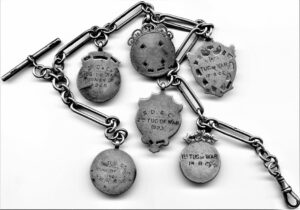
“My great grandad Ernest Stanford Homewood, who was born in Woodchurch in 1874, worked as a brickfield labourer for Smeed Dean. See below for his tug of war medals from the 1920s. His family moved to Lynsted for a while where he worked as an agricultural labourer, but by 1901 he was a brickfield temperer. A temperer cut the clay out of the washback (a series of clay reservoirs), and loaded it into a wheel barrow and took it to the berth (a bench where the bricks are moulded), where he emptied it into the hopper (or cylinder of the mixer). In 1911 he was living at George Street, Sittingbourne, with his wife and three children. I wonder what my great grandad would have thought of how the job is done now!!!”

This was to be the first of a series of tours that Murston Heart were organising as part of their Heritage Lottery Funded Reminiscing Project – Lost and Found in Murston, but due to a change in staff at Smeed Deans, this has been postponed. If you would be interested in a brick tour in 2023, please let us know, and we will see if this can be re-arranged.
If you wish to know more about Wienerberger / Smeed Dean site please visit their website: https://www.wienerberger.co.uk/products/brick/smeed-dean-bricks.html
If you would like to know more about the Murston Heart project and be involved please visit their website: www.murstonheart.org.